Circuit breakers
High-voltage circuit breakers interrupt fault currents and switch load on transmission and sub-transmission networks, from the 3AP self-compression platform to the SF6-free 3AV1 Blue vacuum design. This catalog covers the 3AP1 FG live-tank breaker (145 kV), the 3AP1 DT dead-tank breaker (145 kV and 245 kV, sold in the Americas as SPS2S), the 3AP2 FI live-tank breaker (420 kV), and the 3AV1 Blue clean-air vacuum breaker (145 kV). All families share the stored-energy spring drive concept of a modular platform that spans 72.5 kV up to 1100 kV.
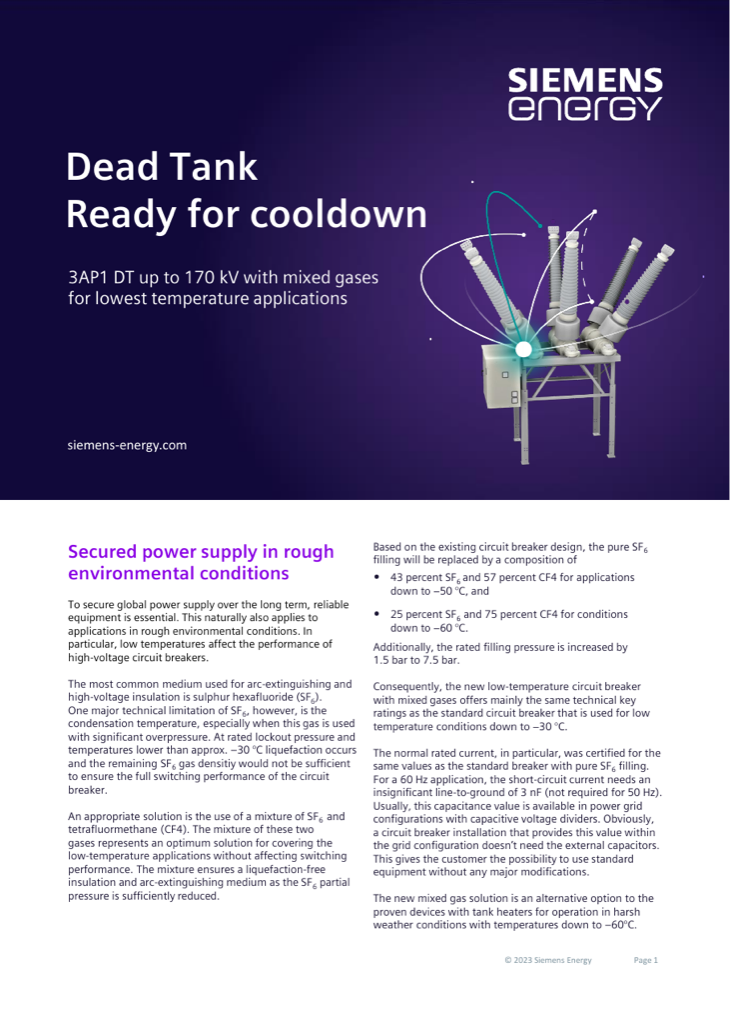
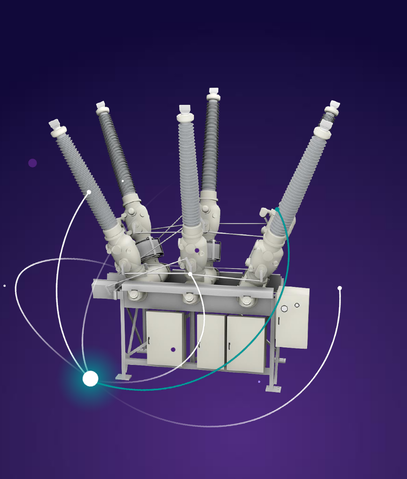
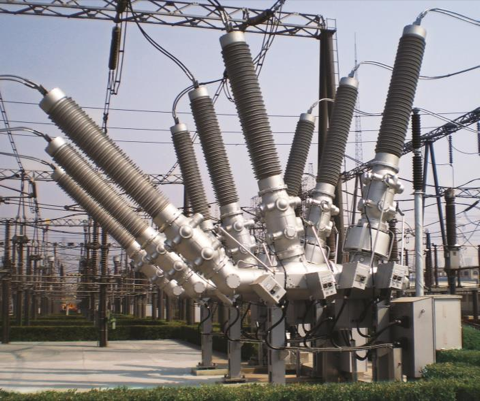
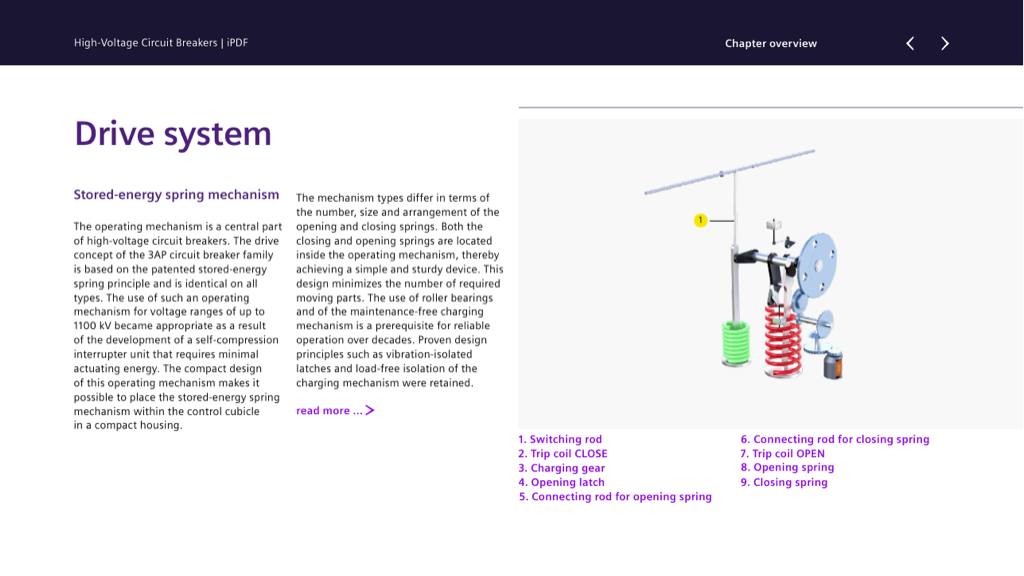
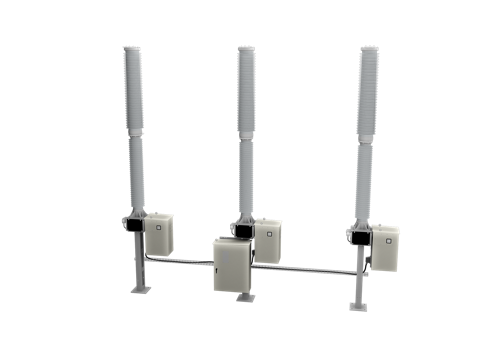
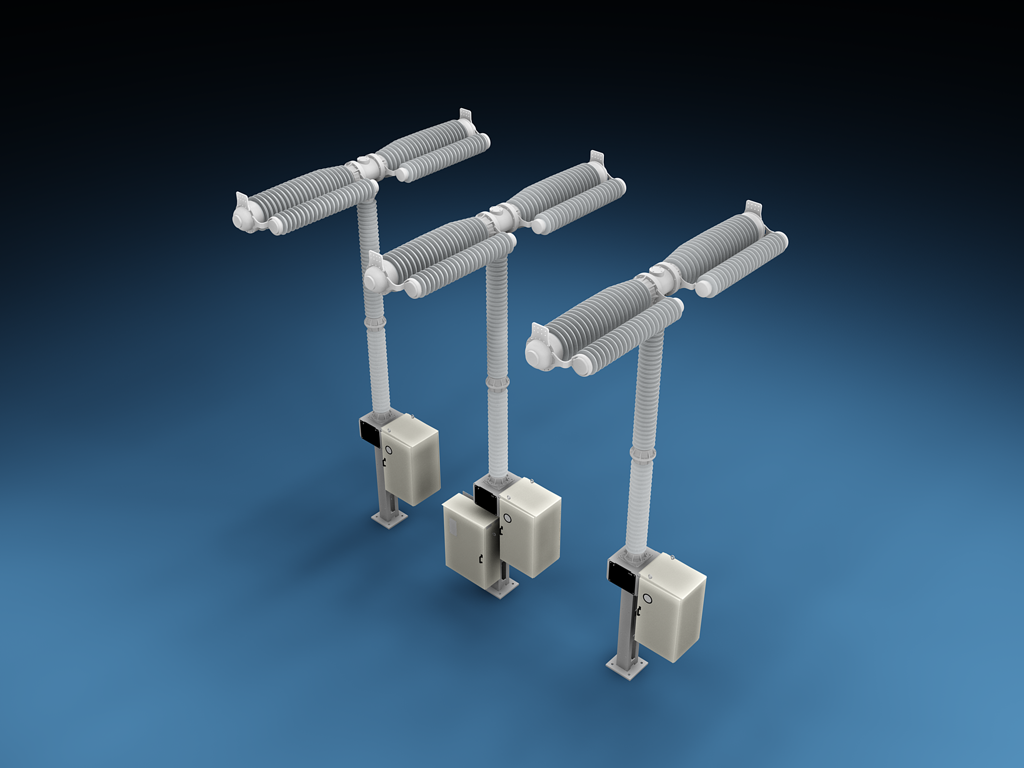
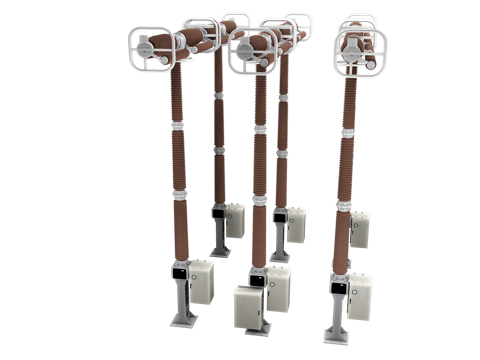
A high-voltage circuit breaker is the switching device in a substation that can interrupt fault currents such as short circuits, and also perform planned switching of lines, transformers and other equipment, on networks rated 72.5 kV and above. Each pole contains an interrupter unit that extinguishes the switching arc in an insulating medium — SF6 gas in self-compression designs, or a sealed vacuum interrupter with clean-air insulation in SF6-free designs — driven by a stored-energy spring mechanism that holds the operating energy pre-charged. Breakers are built either as live-tank designs, with the interrupters housed in insulator columns at line potential, or as dead-tank designs, with the interrupters inside an earthed metal enclosure whose bushings can carry built-in current transformers. Glossary →
System-voltage coverage per family (√ scale) — bars link to the product pages. Families without a published kV rating are not drawn.
24 of 24 products
Why it matters
The circuit breaker is the only element in a substation that can interrupt a full short-circuit current, so its reliability directly bounds how fast a network clears faults and how much equipment survives them. Interrupting technology matters: the 3AP family uses the self-compression arc-quenching principle, patented in 1973 and developed continuously since, while vacuum interruption — proven over more than 40 years and more than 6 million interrupters in medium voltage — entered high-voltage networks in 2010. The operating mechanism matters just as much: the stored-energy spring drive used across the platform is guaranteed for 10,000 operating cycles and is maintenance-free for 25 years or 6,000 operating cycles, which sets the maintenance budget for the breaker fleet. Regulation is now a third driver: SF6 has a global warming potential 24,300 times that of CO2, and F-gas rules are pushing operators toward vacuum and clean-air designs such as the 3AV1 Blue for new installations up to 145 kV. Finally, the tank arrangement — live tank, dead tank with bushing current transformers, or compact designs — determines substation footprint and how protection-class CTs are provisioned, so breaker selection is a planning decision, not just a component purchase.
One proven platform, 72.5 kV to 1100 kV
The 3AP families in this catalog are configurations of a single modular platform with more than 160,000 breakers delivered, using self-compression interrupter units and a common drive concept. Ratings in this catalog run from 145 kV / 40 kA (3AP1) up to 420 kV with 50 kA and 63 kA variants (3AP2 FI).
Stored-energy spring drive with quantified life
The spring operating mechanism is guaranteed for 10,000 operating cycles and is maintenance-free for 25 years or 6,000 operating cycles, with few moving parts and the springs accessible outside the gas compartments. The same drive principle applies from 72.5 kV up to 800 kV, so operating experience transfers across the fleet.
An SF6-free option at 145 kV today
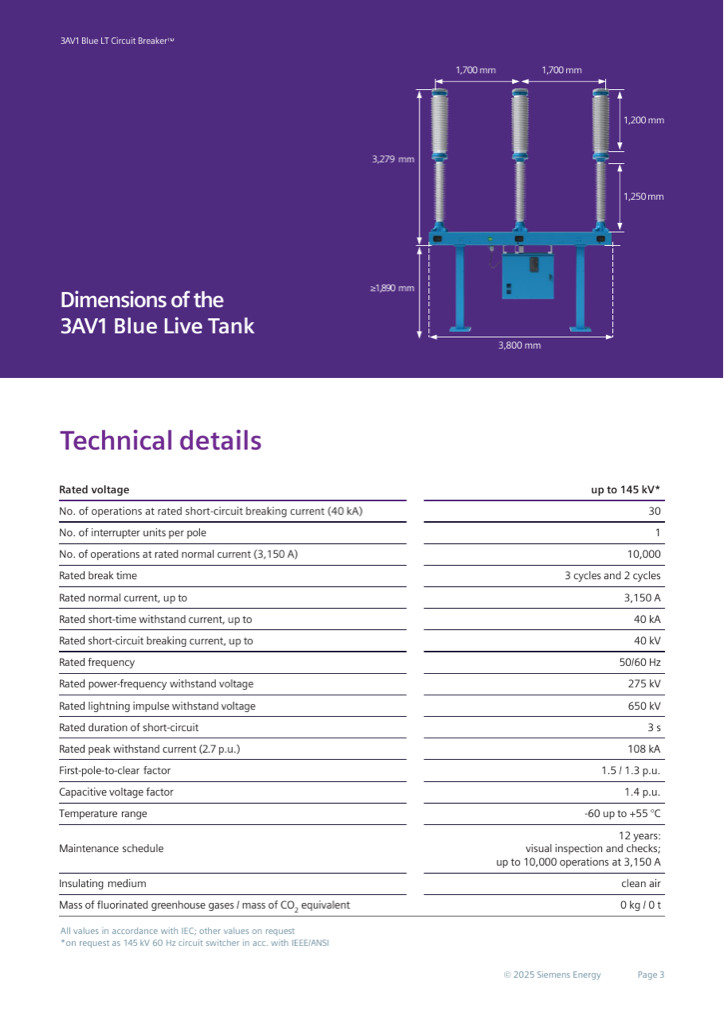
The 3AV1 Blue combines vacuum interruption with clean-air insulation for 145 kV / 40 kA switching with zero F-gases. The sealed-for-life vacuum interrupter is maintenance-free, the switching medium cannot liquefy, and the breaker delivers full performance down to -60 °C ambient.
Live-tank or dead-tank to fit the substation
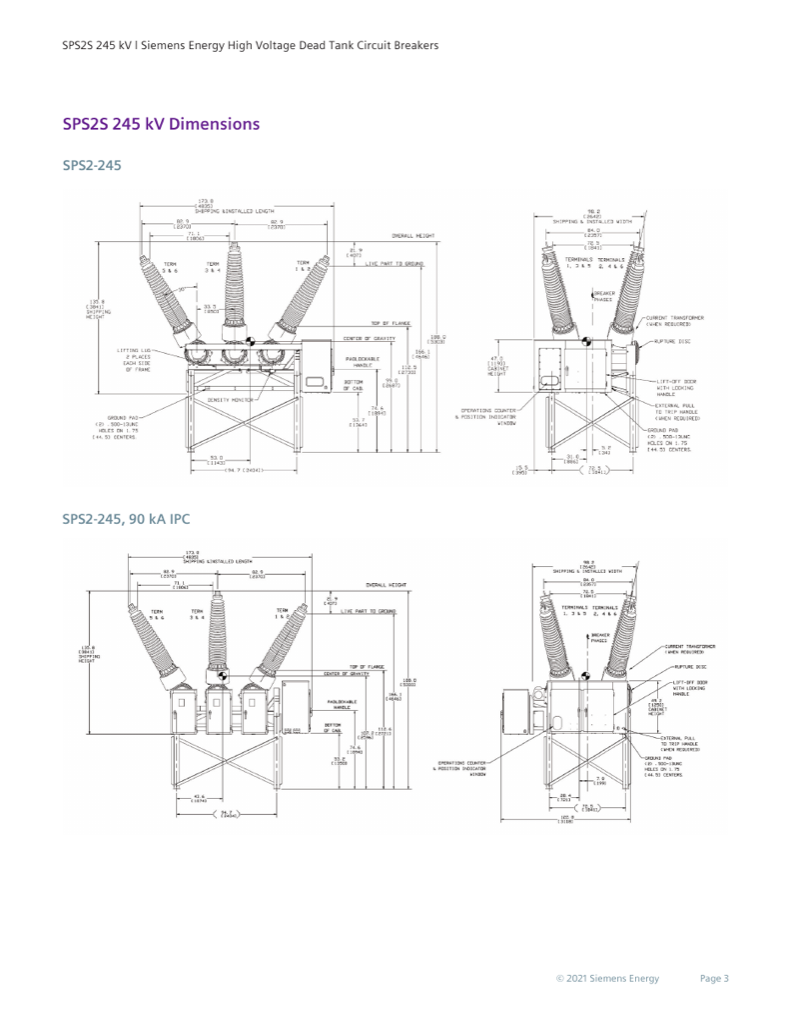
The same 145 kV ratings are published for both the live-tank 3AP1 FG and the dead-tank 3AP1 DT, so the choice follows the substation design rather than the electrical duty. The dead-tank arrangement carries toroidal-core bushing current transformers — up to four per bushing — where protection schemes need multiple CTs per pole.
Frequently asked questions
What does a high-voltage circuit breaker actually do?
It protects the network by interrupting current flow when a fault such as a short circuit or overload occurs, and it performs planned switching of lines, transformers, and reactive equipment. On detection of abnormal current, the operating mechanism opens the contacts and the arc is extinguished in the interrupting medium — SF6 in the self-compression 3AP families, or a vacuum chamber in the 3AV1 Blue. High voltage in this context means rated voltages of 72.5 kV and above; the platform behind this catalog extends up to 1100 kV.
What is the difference between a live-tank and a dead-tank circuit breaker?
In a live-tank breaker (3AP1 FG, 3AP2 FI, 3AV1 Blue) the interrupter housing sits at line potential on top of insulator columns; in a dead-tank breaker (3AP1 DT) the interrupters sit inside a grounded metal enclosure fed through bushings. The dead-tank enclosure allows bushing current transformers — up to four per bushing on the 3AP1 DT — which suits protection schemes that need multiple CT cores per pole. At 145 kV the published ratings of the 3AP1 FG and 3AP1 DT are identical, so the decision is driven by substation layout, seismic and CT requirements rather than electrical performance.
How does the 3AV1 Blue vacuum breaker differ from the SF6-based 3AP families?
The 3AV1 Blue interrupts current in a sealed vacuum chamber and uses clean air as the insulating medium, so it contains no SF6 or any other F-gas — relevant because SF6 has a global warming potential 24,300 times that of CO2. The vacuum interrupter is sealed for life and maintenance-free, switching performance does not degrade with operations, and there is no switching medium that can liquefy at low temperatures, giving full performance down to -60 °C. Current production covers 145 kV / 40 kA, while the 3AP self-compression families cover the ratings above that.
How do I choose between the breaker families in this catalog?
Start from rated voltage and short-circuit breaking current: 145 kV / 40 kA is served by the 3AP1 FG (live tank), 3AP1 DT (dead tank), and 3AV1 Blue (SF6-free); 245 kV by the 3AP1 DT; and 420 kV by the 3AP2 FI with 50 kA and 63 kA variants. Then decide the tank arrangement (bushing CTs and layout favor dead tank), the pole operation you need (the 3AP2 FI has one mechanism per pole for single- and three-pole auto-reclosing, while the 3AP1 FG drives all three poles from one mechanism), and whether an SF6-free design is required. Each product entry carries the full grouped spec tables and variant briefs to compare against your system study.
What information should I include when requesting a quote for a circuit breaker?
Reference the type designation from the product entry — for example 3AP1FG-1S-145KV, 3AP1DT-2-245KV 3-C, 3AP2FI-2-420KV, or 3AV1FG — since it encodes the family, interrupter arrangement, and voltage class. Add your system parameters (rated voltage, normal current, short-circuit breaking current, frequency), the control voltage (documented variants include 110 V DC and 220 V DC), insulator type, ambient temperature range, and any CT requirements for dead-tank designs. The spec tables and datasheet downloads on each catalog entry list exactly which of these fields are configurable per family.
What maintenance and spare-parts demand should I plan for over the breaker's life?
The stored-energy spring mechanism across the platform is maintenance-free for 25 years or 6,000 operating cycles, and the 3AV1 Blue's vacuum interrupter is sealed for life; Blue products follow a 12-year visual-inspection schedule with the first major inspection after 25 years. Contact-wear monitoring (such as a contact erosion analyzer) and digital condition monitoring can convert time-based servicing into condition-based servicing. Registering your installed breakers with their serial and type designations lets us match spares, service intervals, and documentation to your exact configuration — see the services section for maintenance and spare-parts programs.
Can accessories like controlled-switching devices be ordered with the breaker?
Yes — the platform supports a controlled-switching (point-on-wave) control unit for reducing switching overvoltages when energizing transformers, capacitor banks, reactors, and transmission lines, with IEC 61850 / DNP3 station communication. Contact-erosion analysis and digital monitoring of gas density, temperature, switching counts, and breaker position are also available as breaker-level options. List required accessories alongside the type designation in your quote request so they are engineered with the operating mechanism from the start.