Special transformers
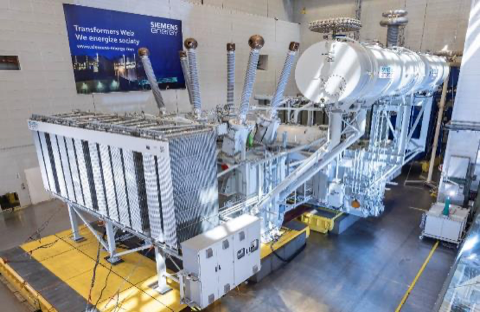
Special transformers cover applications a standard network transformer cannot serve: our catalog includes the phase-shifting transformer (PST) family in single-core and two-core designs up to 2,000 MVA and 765 kV (single-phase units), and the Tractronic on-board traction transformer platform — including the ultra-light Thinity design — for rail vehicles up to 15 MVA. Both families are engineered per project rather than picked from a fixed rating list, so the spec tables on each product page show design envelopes and documented reference units.
Special transformers are transformers engineered for tasks that a standard step-up or network transformer does not perform. The class includes phase-shifting transformers, which insert a controllable phase-angle difference between their terminals so grid operators can steer active power onto chosen transmission paths and relieve overloaded lines, and on-board traction transformers, which supply a rail vehicle's drive and auxiliary systems from the overhead line within the vehicle's weight, space, and vibration limits. Because each unit is matched to a specific grid or vehicle, these transformers are custom-engineered per project rather than selected from a fixed rating list. Glossary →
2 of 2 products
Why it matters
In a meshed AC grid, power flows divide according to line impedances, not contracts — so a heavily loaded corridor can hit its thermal limit while parallel paths sit underused. A phase-shifting transformer inserts a controllable phase-angle difference that redirects active power onto the desired path, which lets operators relieve congestion, protect lines from overload, and manage cross-border exchange and volatile renewable feed-in without building new lines. Traction transformers solve a different constraint: on board a rail vehicle, the transformer must accept catenary supply on networks ranging from 16 2/3 to 60 Hz and multiple voltage systems while meeting hard weight, volume, and vibration limits that no station transformer faces — its performance directly bounds the train's efficiency and availability. Because both classes are custom-engineered to the specific grid or vehicle, early alignment on ratings, installation constraints, and applicable standards matters more here than in any catalog-standard equipment class.
Power-flow control up to 2,000 MVA
The PST family spans ratings up to 2,000 MVA and 765 kV (single-phase units), with a documented reference unit achieving plus/minus 60 degrees of phase-angle regulation and plus/minus 10 percent voltage regulation. That range covers targeted congestion relief on regional corridors through large interconnector corridors.
Two designs matched to system voltage
Single-core PSTs (extended-delta or hexagonal) offer economic advantages at system voltages up to approximately 230 kV; the two-core design keeps the tap winding and on-load tap changer off the line terminals, giving the greatest operating security above 230 kV. The choice is documented in the PST variant table so you can pre-qualify before requesting a design study.
A traction platform for every vehicle type
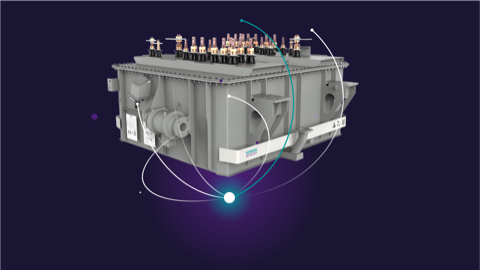
Tractronic covers AC/DC locomotives, high-speed trains, EMUs, tram trains, and diesel-AUX applications up to 15 MVA (higher on request), across 1.5/3 kV DC and 11.5/15/25 kV AC networks at 16 2/3 to 60 Hz. Machine-room, under-floor, low-floor, and on-roof installation variants — and the Thinity design with up to 25 percent weight reduction — let the transformer adapt to the vehicle rather than the reverse.
Type-tested to the governing standards
PSTs are built to IEC 60076 and ANSI/IEEE in the Weiz lead factory; Tractronic units carry routine and type tests to IEC 60310, welding qualification to EN 15085-2, and manufacturing certified to ISO 22163 (IRIS). Test scope and certifications are listed per product in the standards spec group.
Frequently asked questions
What does a phase-shifting transformer actually do?
It inserts a controllable phase-angle difference between its source and load terminals, which changes how active power divides across parallel transmission paths. Operators use this to steer power away from overloaded lines, raise the usable capacity of existing corridors, and manage cross-border exchange — the flow follows the injected angle rather than the natural impedance split of the meshed network.
When is a two-core PST design preferred over a single-core design?
Single-core designs (extended delta or hexagonal) are the economic choice at system voltages up to approximately 230 kV, with zero impedance at the neutral tap. Above that level the two-core, dual-tank design is preferred because the tap winding and on-load tap changer are not directly connected to the line terminals, so the OLTC is not exposed to system disturbances — the configuration with the greatest operating security. Both designs are compared in the variant table on the PST product page.
How is a traction transformer different from a station transformer?
A traction transformer is mounted on the vehicle itself, so the design priority is the highest possible power rating within tight space and weight limits, plus tolerance of shock and vibration (verified per IEC 61373 on request). It must also handle railway supply systems — 16 2/3 to 60 Hz and voltages from 1.5 kV DC to 25 kV AC — rather than a single fixed grid frequency. Its test program mirrors that of a power transformer but follows the rail-specific standard EN/IEC 60310, with manufacturing certified to rail quality regimes such as ISO 22163 (IRIS).
How do I narrow down the right unit in this category?
Start from the application: grid power-flow control leads to the PST page, on-board rail supply leads to Tractronic. Then use the variant tables — the PST page compares single-core versus two-core by system voltage and impedance behavior, and the Tractronic page lists reference designs per vehicle type with example rating, primary voltage, frequency, and weight. Because every unit is engineered per project, these tables qualify the family and design direction rather than a finished part number.
What information should I include in a PST inquiry?
The key inputs are system voltage and frequency, required throughput rating in MVA, the phase-angle regulation range you need, any impedance requirements, emergency overload expectations, cooling preference (ONAN/ONAF through ODWF variants are supported), and the governing standard (IEC 60076 or ANSI/IEEE). The electrical-ratings spec group on the PST page mirrors these fields, so referencing it keeps the inquiry aligned with how the design team scopes a unit.
What information should I include in a traction transformer inquiry?
Specify the vehicle type (locomotive, high-speed, EMU, tram train, or diesel AUX), the supply systems it must operate under (which of 1.5/3 kV DC and 11.5/15/25 kV AC, and frequencies), required traction and auxiliary winding power, the mounting position (machine room, under-floor, low-floor, or on-roof), the weight and space envelope, and any cooling-fluid constraints — mineral oil, silicone, or ester fluids such as MIDEL 7131 are all supported. The Tractronic spec tables and downloadable brochure cover each of these dimensions.
What lifecycle support exists after delivery?
Both families are designed for decades of service, and support spans commissioning, condition monitoring, maintenance, and refurbishment — Sensformer digital features are available on PSTs, and Tractronic offers a sensor-based health-monitoring system. When you need spares, diagnostics, or an overhaul, an inquiry that identifies the specific unit and references the documentation on its product page reaches the right specialists faster.